A fast-paced game project designed around the challenge of making an intentionally difficult game feel fair, accessible, and fun.
UX Research &
Development
Development involved several iterations where features were added, modified, or removed due to both time constraints and user playtesting feedback. Many of the final mechanics evolved throughout development as the game became more focused on balancing challenge, readability, and overall player experience.
One notable change came from user testing. Early versions relied exclusively on the P and O keys for movement, which proved less comfortable for some left-handed players. As a result, A and S controls were introduced as an alternative input option, making the core interaction more accessible while preserving the intended gameplay mechanic.
A significant portion of development was spent refining the relationship between difficulty and feedback. Enemy behavior, collectible placement, movement responsiveness, scoring, and recovery mechanics were continually adjusted to ensure that failures felt understandable rather than arbitrary. The objective was not to eliminate frustration, but to create an experience where players felt motivated to immediately try again after each unsuccessful run.
Gameplay Design
& Art Direction
One of the primary design goals was finding the balance between difficulty and enjoyment. Games such as Flappy Bird demonstrated how frustration can become a powerful motivator, but they also showed how quickly challenge can become polarizing. Bathroom Rampage was designed to be difficult enough to encourage repeated attempts without becoming unnecessarily punishing. The goal was to keep players engaged through challenge while maintaining a lighthearted and approachable experience.
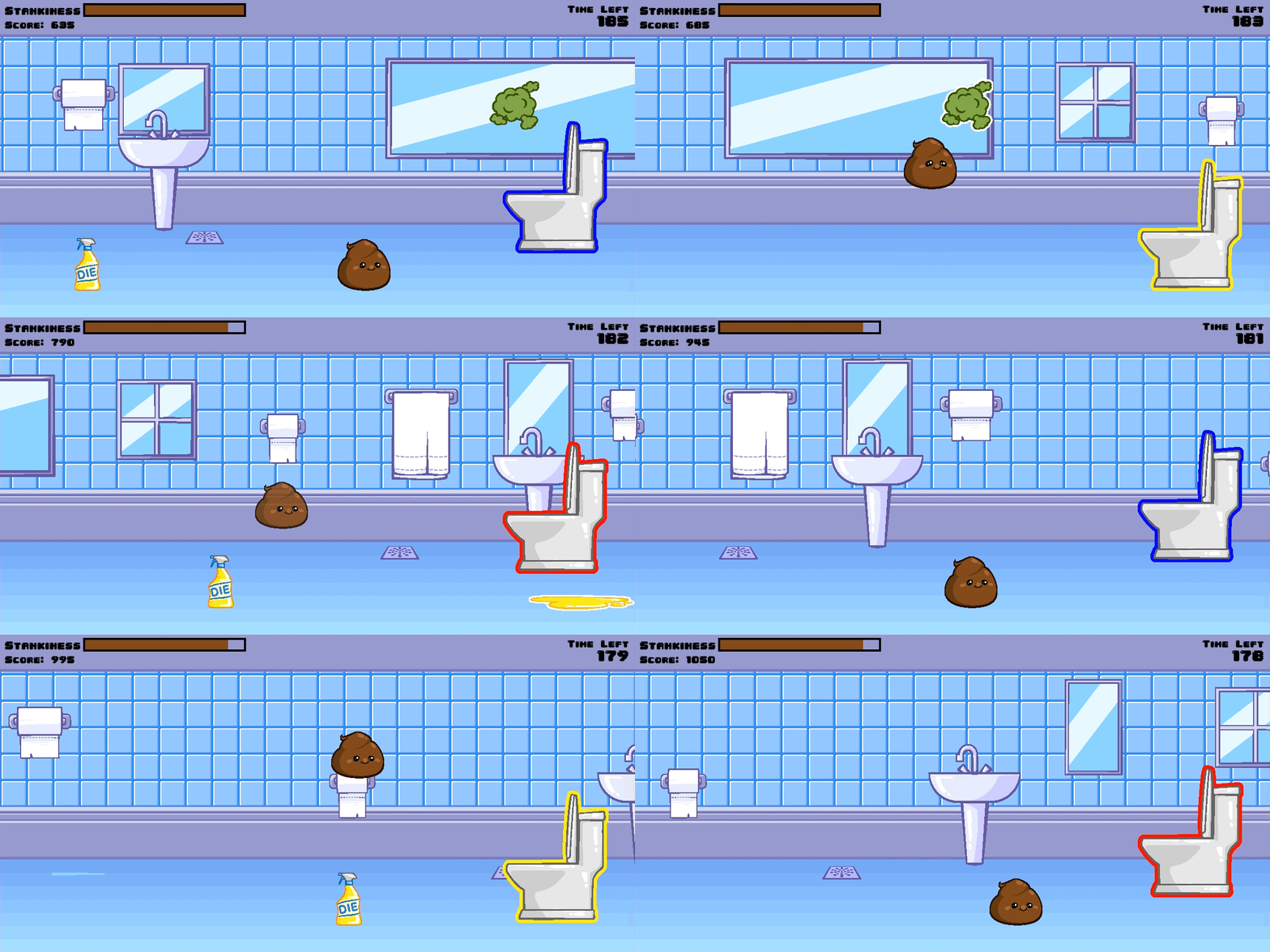
While the game’s concept revolves around poop (ew), I still didn’t want it to feel visually unpleasant. I took a whimsical approach to the art direction, focusing on simple shapes, playful character design, and a colorful palette to create a more youthful and inviting experience. Graphics were designed to achieve an intentional 8-bit aesthetic that remains cohesive to the arcade-style gameplay.
Because players are simultaneously managing movement, hazards, score, stank levels, and remaining time, visual communication became an important part of the design process. Distinct silhouettes, recognizable collectibles, and a clear interface hierarchy helped ensure that important information could be understood quickly, even during more chaotic moments of gameplay.